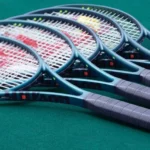

Most players should start with a tennis string tension somewhere around the middle of their racket’s recommended range, then adjust based on the string type, comfort, control and how the ball comes off the racket.
As a simple starting point, many adult players end up around 50 to 55 lbs with synthetic gut or multifilament, and slightly lower with polyester, often around 46 to 52 lbs. These are not strict rules, but they are sensible starting ranges for many recreational and club players.
If you are booking a restring with Passionnement Tennis, we can help you choose a practical starting tension based on your racket, string choice and how you play. You can also check our tennis stringing prices before booking.
Quick Answer
- Want more power and comfort? Try a lower tension.
- Want more control and a firmer feel? Try a higher tension.
- Using polyester? Consider stringing lower than you would with synthetic gut or multifilament.
- Using multifilament or synthetic gut? A mid-range tension is usually a safe starting point.
- Not sure? Start around 52 lbs, then adjust next time based on feel.
For many players, the best tension is not the highest number they can tolerate. It is the tension that gives enough control without making the racket feel harsh, dead or difficult to use.
Tennis String Tension Starting Points
| Player need | Suggested starting point | Why it can help |
|---|---|---|
| General all-round setup | 50 to 54 lbs | Balanced starting point for control, comfort and depth. |
| More comfort | 46 to 51 lbs | Lower tension can make the string bed feel softer and easier on the arm. |
| More power | 46 to 51 lbs | Lower tension can help the ball come off the strings with easier depth. |
| More control | 53 to 58 lbs | Higher tension can create a firmer, more controlled response. |
| Polyester string | 46 to 52 lbs | Polyester is already firm, so many players string it lower. |
| Multifilament string | 50 to 57 lbs | Softer strings can usually handle a slightly higher tension. |
| Synthetic gut | 50 to 56 lbs | Good all-round range for value and playability. |
| Beginner setup | 50 to 54 lbs | Simple, balanced range before making fine adjustments. |
These ranges are only a guide. Your racket head size, string pattern, swing speed, string type and personal feel all matter.
Lower String Tension
Lower string tension usually gives a softer, more powerful and more forgiving feel. The strings can pocket the ball a little more, which may make it easier to generate depth without swinging harder.
Lower tension can be useful if:
- Your racket feels too harsh or stiff.
- You struggle to hit with depth.
- You want easier power.
- You are using a firm polyester string.
- You want a more comfortable response.
- Your shots are landing short too often.
The trade-off is that lower tension can sometimes feel less precise. If the ball starts flying long, or if you feel like the racket launches the ball too easily, you may need to increase the tension slightly next time.
Higher String Tension
Higher string tension usually gives a firmer and more controlled response. The ball may leave the strings with a lower, more predictable launch, which can suit players who swing fast and create their own power.
Higher tension can be useful if:
- Your shots are flying long.
- You want a firmer, more controlled feel.
- You use a powerful string such as multifilament.
- You hit flatter and want a tighter response.
- You already generate plenty of racket-head speed.
The trade-off is comfort. If the racket starts to feel boardy, harsh or low-powered, the tension may be too high for your string, racket or arm.
Polyester, Multifilament and Synthetic Gut Tension
Polyester
Polyester strings are often used for control, spin and durability. They are usually firmer than multifilament or synthetic gut, so many players string polyester lower.
For polyester, a good starting point is often around 46 to 52 lbs. Strong hitters may still prefer the upper end of that range, but many recreational players get a better balance by avoiding very high polyester tensions.
If your polyester setup feels harsh, dead or difficult to generate depth with, consider dropping the tension by 2 to 4 lbs at your next restring. You can also read our guide on how often to restring a tennis racket, because dead polyester can feel stiff and unpredictable before it breaks.
Multifilament
Multifilament strings are usually softer, more powerful and more comfortable. They can suit players who want easier depth, better feel or a more arm-friendly setup.
For multifilament, a common starting point is around 50 to 57 lbs. If the ball flies too much, you can go slightly higher. If the racket still feels too firm, you can come down a little.
Synthetic Gut
Synthetic gut is a good value all-round string. It is often a sensible choice for beginners, casual players and anyone who wants simple playability without overthinking the setup.
For synthetic gut, a practical starting point is around 50 to 56 lbs. Many players will be comfortable in the middle of that range.
How to Adjust Your Tension Next Time
Do not change too many things at once. If you switch string and tension at the same time, it can be harder to know which change caused the new feel.
Use this as a simple adjustment guide:
- If the ball flies long, increase tension by 2 lbs.
- If the racket feels harsh, reduce tension by 2 lbs.
- If you lack depth, reduce tension by 2 lbs.
- If you want a firmer response, increase tension by 2 lbs.
- If you switch to polyester, consider lowering tension by a few pounds.
- If you switch to multifilament, you may be able to string slightly higher.
Small changes are usually better than dramatic jumps. A 2 lb change is often enough to notice without making the racket feel completely unfamiliar.
String Tension and Spin
String tension can affect how spin feels, but it is not the only factor. String type, string shape, racket-head speed and technique usually matter more.
Some players find lower tension helps the ball pocket and launch with easier spin. Others prefer higher tension because it gives them the confidence to swing faster without losing control.
If your main goal is spin, look at both tension and string choice. A shaped polyester can help some players generate more bite, but it may not be the best choice if comfort is the priority.
For string selection, see our tennis stringing prices, which includes Tier 1, Tier 2 and Tier 3 string options.
String Tension and Comfort
If comfort is your priority, avoid going too high, especially with firm polyester. Lower tension, softer strings and sensible restring timing can all help the racket feel easier to use.
Comfort-focused players often do well with:
- Multifilament strings.
- Synthetic gut.
- Softer co-polyester strings.
- Lower to mid tension.
- Fresh strings before the setup goes dead.
If you are trying to make the racket feel easier on the arm, the string type may matter as much as the tension. A softer string at a sensible tension will usually be more comfortable than a firm string pulled very tight.
What Tension Should Beginners Use?
Beginners should usually start with a simple, forgiving setup. A synthetic gut or multifilament around 50 to 54 lbs is a sensible place to begin for many adult players.
At this stage, the goal is not to chase a professional-style setup. The goal is a racket that feels comfortable, gives enough depth and lets you develop your strokes without fighting the equipment.
What Tension Should Club Players Use?
Club players usually have more specific preferences. Some want a lower-powered polyester for control. Some want a softer string for comfort. Some want more help with depth.
A practical approach is:
- Start with the string type that matches your game.
- Choose a sensible middle tension.
- Play with it for a few sessions.
- Adjust by 2 lbs next time if needed.
If you play matches or leagues around East London, you may also want a setup you can repeat consistently. Passionnement Tennis offers tennis racket restringing in East London, with E3 drop-off near Bow.
Local Tennis Stringing and Tension Advice
Passionnement Tennis strings rackets for players around Bow, Mile End, Victoria Park, Hackney Wick, Hackney, Stratford, Tower Hamlets and Canary Wharf.
Current prices:
- £20: bring your own string.
- £25: Tier 3 string included.
- £30: Tier 2 string included.
- £40: Tier 1 string included.
Turnaround options:
- Standard: collection within 7 days.
- Fast: collection within 4 days for +£2.
- Urgent: 24-hour turnaround when available for +£6.
- Same day: same-day turnaround when available for +£10.
See tennis stringing London for the main service page, or check tennis stringing prices for the full price breakdown.
FAQs
Is lower string tension better?
Lower string tension is not automatically better, but it can help with comfort, power and easier depth. If your racket feels harsh or low-powered, a lower tension may help.
Is higher string tension better for control?
Higher tension can give a firmer, more controlled response, especially for players who swing fast. If you go too high, though, the racket can feel harsh or unforgiving.
What is a good tennis string tension for beginners?
Many adult beginners can start around 50 to 54 lbs with synthetic gut or multifilament. This gives a balanced feel without being too firm.
What tension should I use for polyester strings?
Many players use polyester around 46 to 52 lbs. Polyester is firm, so it often works better at a slightly lower tension than multifilament or synthetic gut.
What tension should I use for multifilament strings?
Many players use multifilament around 50 to 57 lbs. If you want more control, go slightly higher. If you want more comfort, go slightly lower.
Should mains and crosses be the same tension?
They can be the same, and that is a good simple starting point. Some players adjust mains and crosses separately, but most recreational players should keep it simple unless they already know what they want.